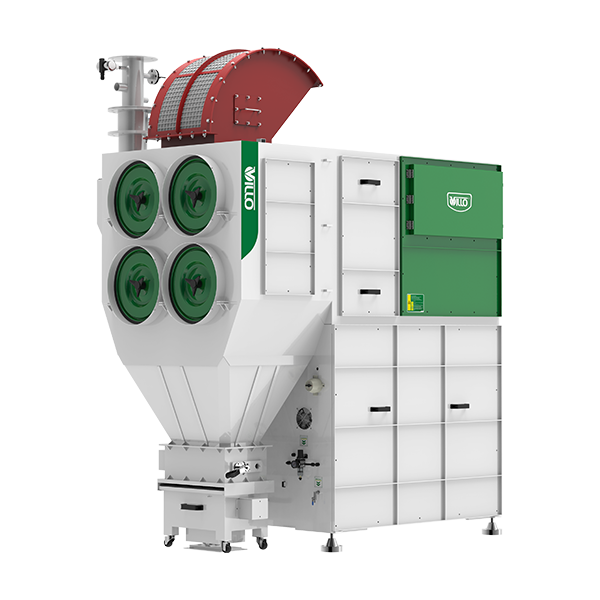
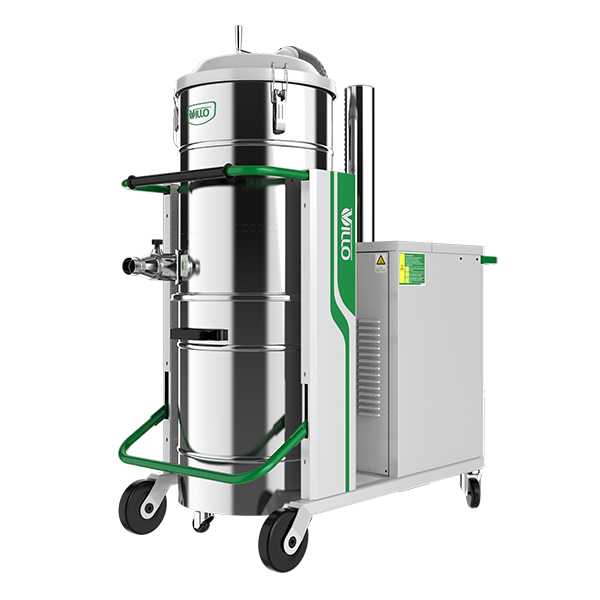
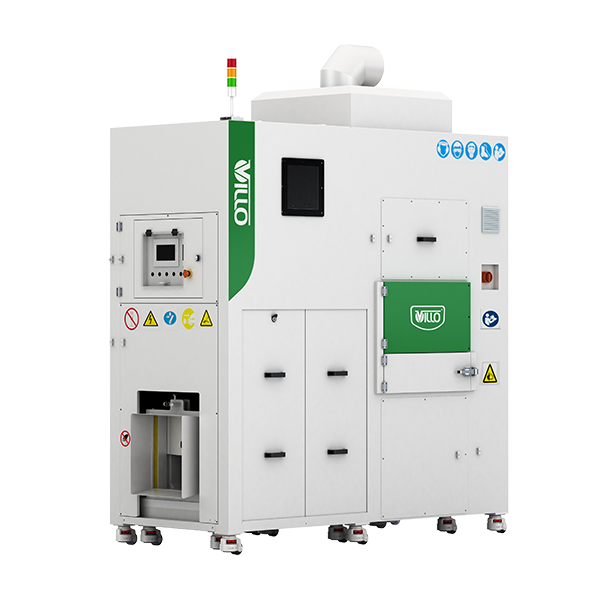
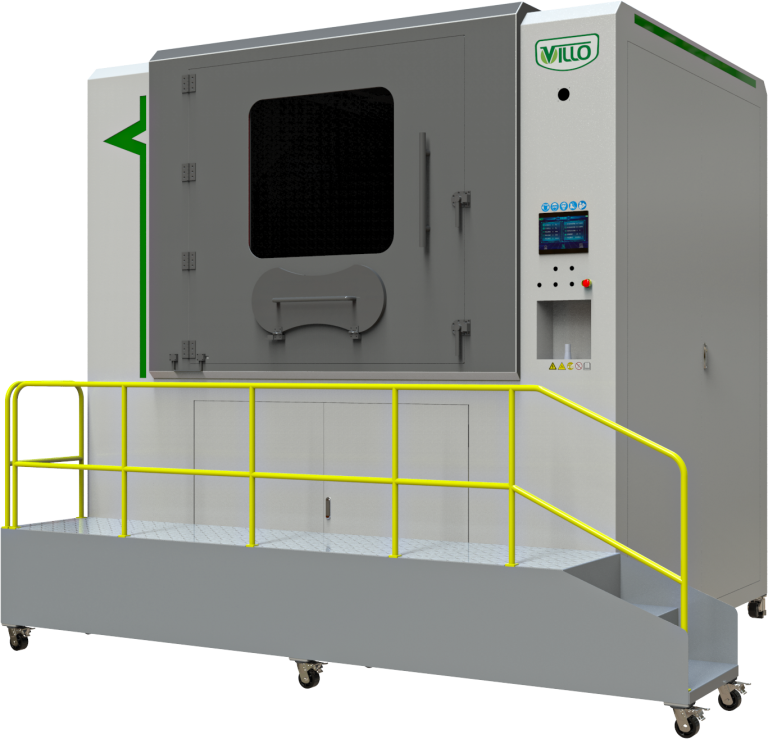
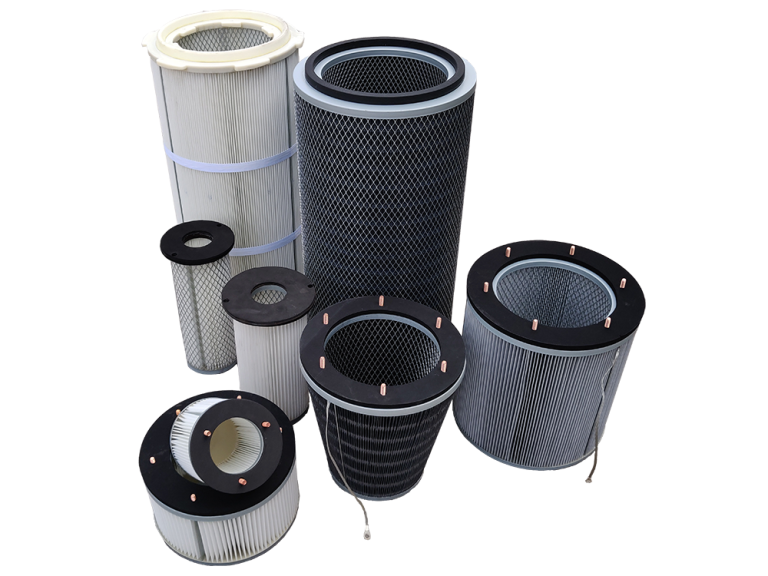
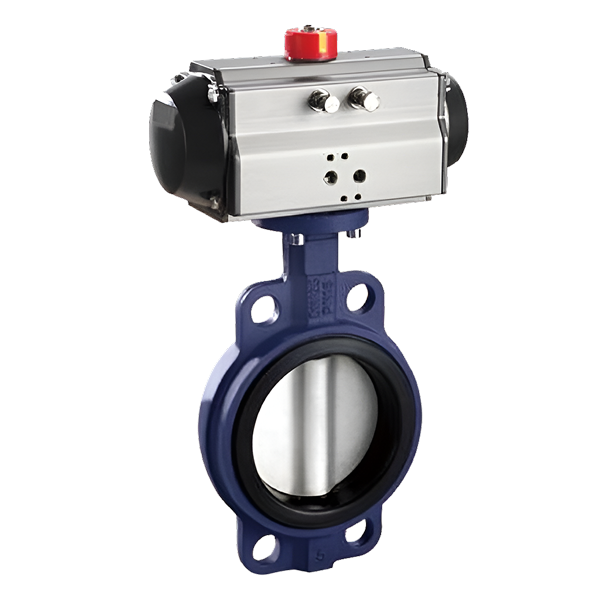
Việc thu gom bụi trong sản xuất dược phẩm không phải là việc dọn dẹp mà là cách ngăn chặn. Hệ thống tuân thủ GMP phải nắm bắt các thành phần dược phẩm hoạt động (API) tại nguồn, ngăn chặn bất kỳ hạt nào của sản phẩm này di chuyển sang sản phẩm tiếp theo và bảo vệ người vận hành khỏi các hợp chất có thể hoạt động sinh học ở mức phơi nhiễm microgam. Điều đó có nghĩa là các bề mặt tiếp xúc không gỉ, bộ lọc HEPA đã được xác nhận, các thay đổi bộ lọc túi vào/túi ra và tài liệu sẽ tồn tại sau cuộc kiểm tra của FDA hoặc EMA.
Tại sao bụi dược phẩm lại là một con thú khác
Một miligam thuốc Paracetamol trên sàn là một mớ hỗn độn. Một miligam hormone hoặc API ung thư trên sàn là một lệnh thu hồi, một phát hiện theo quy định và có khả năng là một nhà điều hành phải nhập viện. Đó là khoảng cách giữa việc thu gom bụi công nghiệp nói chung và thu gom bụi dược phẩm.
Bụi dược phẩm mang đến ba rủi ro chồng chéo mà các nhà thu gom thông thường không được thiết kế để ứng phó:
- Hiệu lực. Many APIs have Occupational Exposure Limits (OELs) below 10 µg/m³ — some below 1 µg/m³.
- Nhiễm chéo. Even trace carryover between batches violates 21 CFR Part 211 and EU GMP Annex 15.
- Tính dễ cháy. Lactose, MCC, starch, and most APIs have Kst values that put them squarely in the combustible dust category.
Vì vậy, hệ thống phải chứa, tách biệt, xác thực và bảo vệ - tất cả cùng một lúc. Đó là lý do tại sao các bộ thu bụi dược phẩm trông không giống các hộp mực bạn tìm thấy trong cửa hàng hàn. Để biết lại cách vật lý lọc thực sự hoạt động ở cấp độ này, hãy xem phân tích của chúng tôi về cách hoạt động của quá trình lọc không khí bụi.
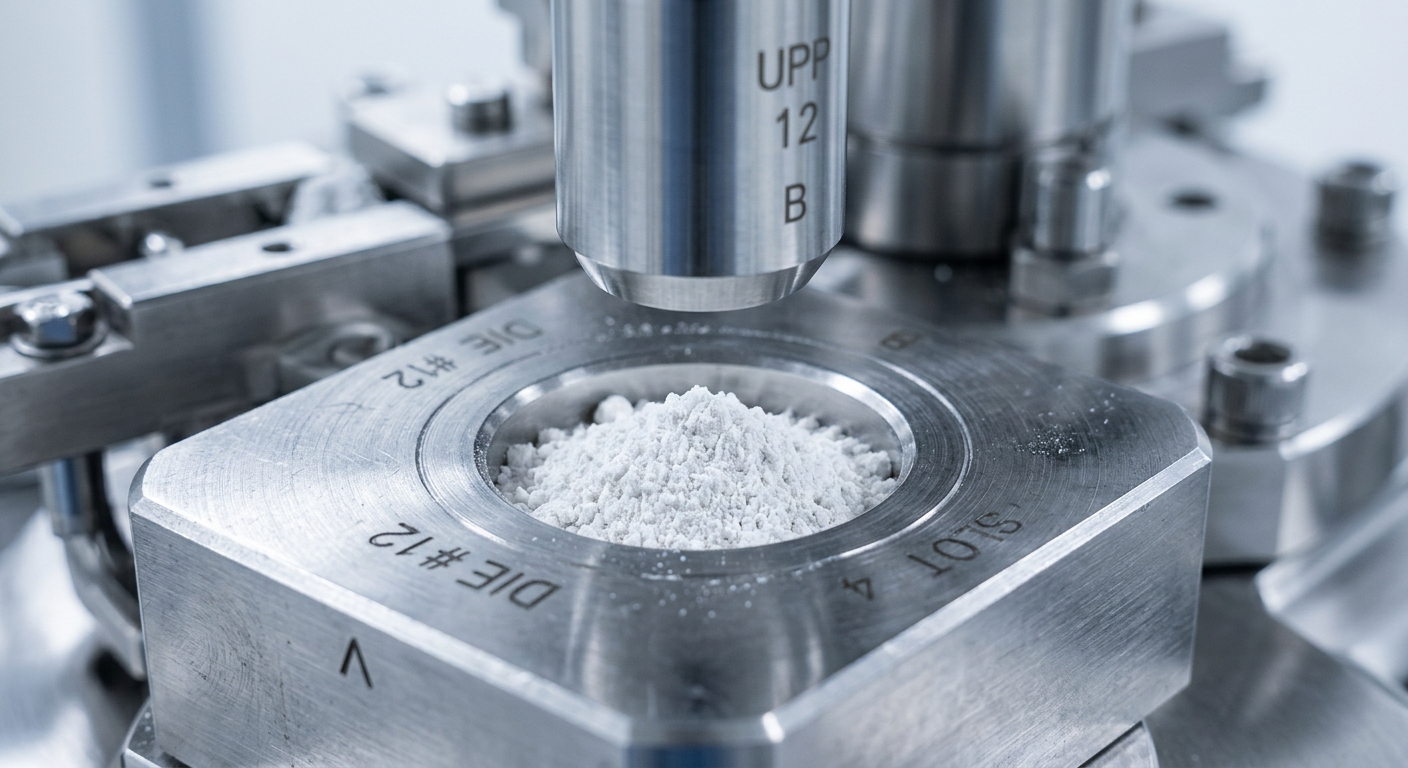
Nơi bụi thực sự thoát ra trong nhà máy dược phẩm
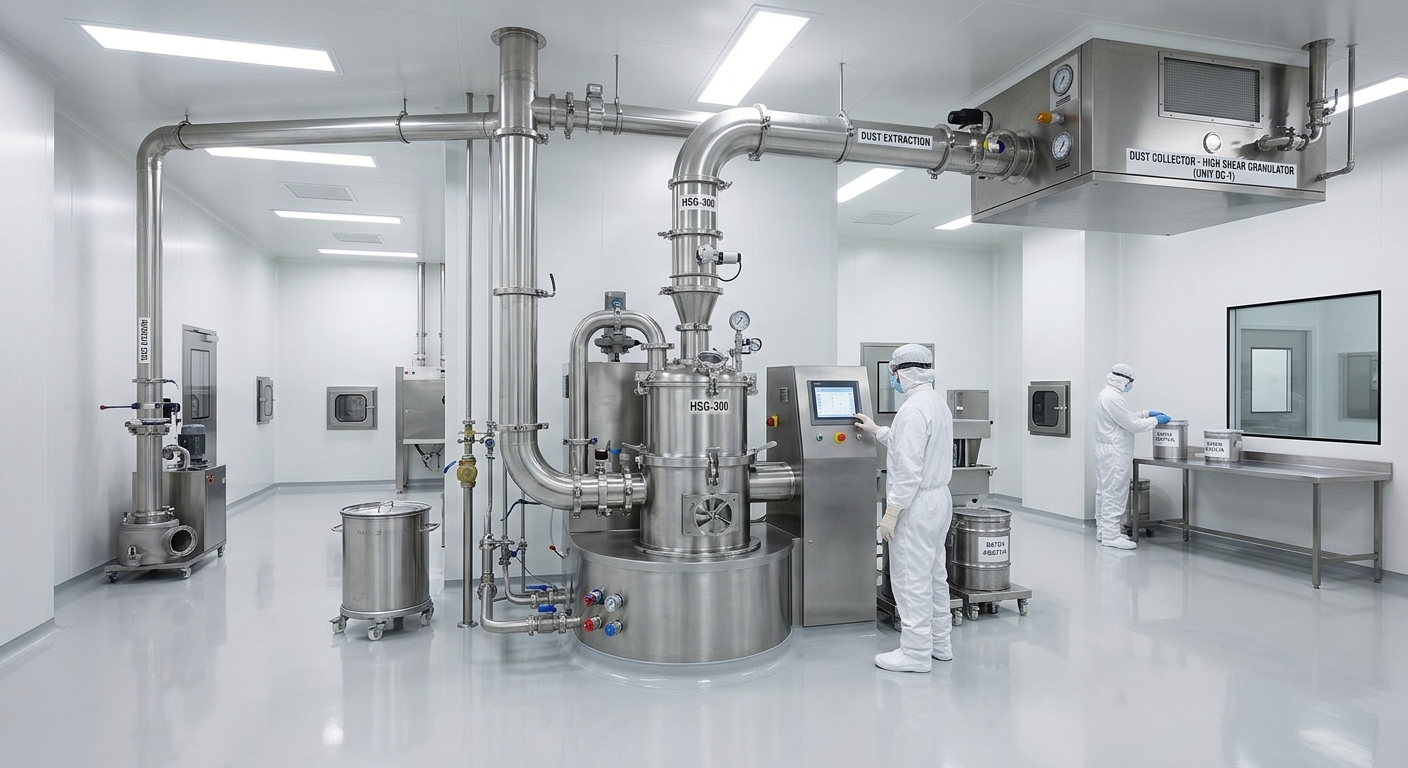
Hầu hết các sự kiện ô nhiễm không xảy ra ở chính bộ phận thu bụi - chúng xảy ra ở hàng chục đơn vị hoạt động cung cấp cho nó. Biết nơi bụi thoát ra sẽ cho bạn biết nơi cần che chắn kín nhất.
Những nghi phạm thông thường
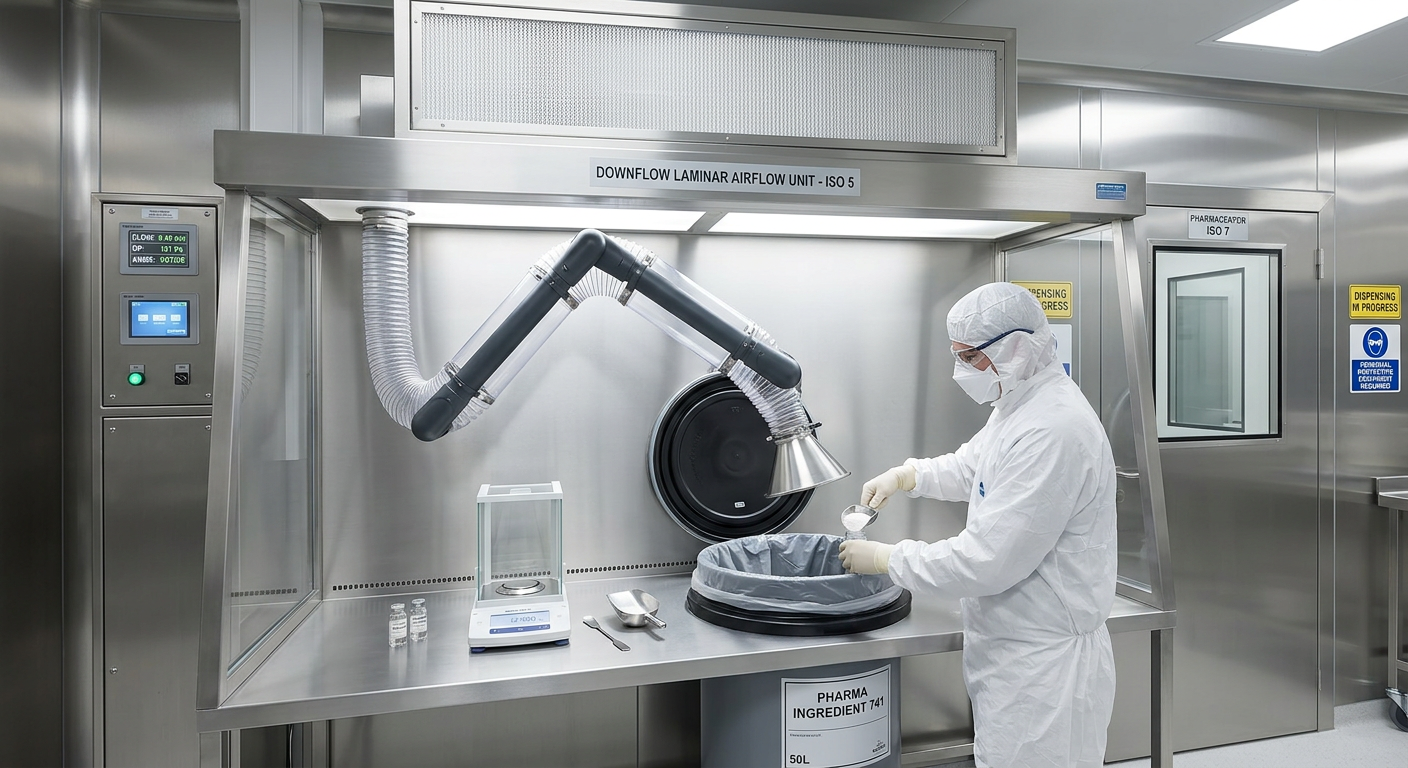
- Buồng pha chế — manual scooping of raw APIs is the single highest-exposure task in most plants.
- Máy tạo hạt và máy sấy tầng chất lỏng — charging, discharging, and bowl cleaning.
- Máy ép viên — feed frame leakage and ejection dust.
- chảo phủ — atomised coating solutions and friable cores.
- Chất độn viên nang — dosator and tamping pin areas.
- IBC và chuyển bin — split-butterfly valve interfaces.
Ví dụ: một nhà sản xuất máy tính bảng thông thường mà chúng tôi hợp tác đã phát hiện mức vượt quá 3 µg/m³ định kỳ không phải do bản thân máy ép mà do cánh tay hút bụi được gắn quá cao 400 mm. Việc hạ thấp nó và lắp thêm mui xe có mặt bích sẽ làm giảm số đọc xuống dưới 0,5 µg/m³. Vận tốc thu được tại nguồn quan trọng hơn tổng CFM tại quạt.
Cấp độ ngăn chặn: Nói ngôn ngữ OEB
Trước khi chỉ định một bộ thu gom, bạn cần biết Dải phơi nhiễm nghề nghiệp (OEB) của mọi hợp chất mà nó sẽ nhìn thấy. OEB thúc đẩy mọi thứ xuôi dòng — lựa chọn bộ lọc, phương pháp thay đổi, thậm chí cả các mối hàn.
- OEB 1–2: OEL > 100 µg/m³. Standard GMP construction, manual filter change with PPE acceptable.
- OEB 3: OEL 10–100 µg/m³. Bag-in/bag-out filters, HEPA H13 minimum.
- OEB 4: OEL 1–10 µg/m³. BIBO mandatory, double HEPA, washdown CIP highly recommended.
- OEB 5: OEL
Một sai lầm phổ biến và tốn kém: thiết kế hợp chất OEB cao nhất mà nhà máy hiện sản xuất mà không để lại khoảng trống cho sản phẩm tiếp theo trong quy trình. Danh mục dược phẩm chuyển sang các phân tử mạnh hơn mỗi năm. Chỉ định một băng tần cao hơn bạn nghĩ bạn cần.
Điều gì làm cho máy hút bụi tuân thủ tiêu chuẩn GMP
Tuân thủ GMP không phải là nhãn dán — đó là danh sách các lựa chọn thiết kế, mỗi lựa chọn đều được ghi lại. Máy hút bụi dược phẩm thực sự tuân thủ tất cả các yêu cầu sau:
Vật liệu và hoàn thiện
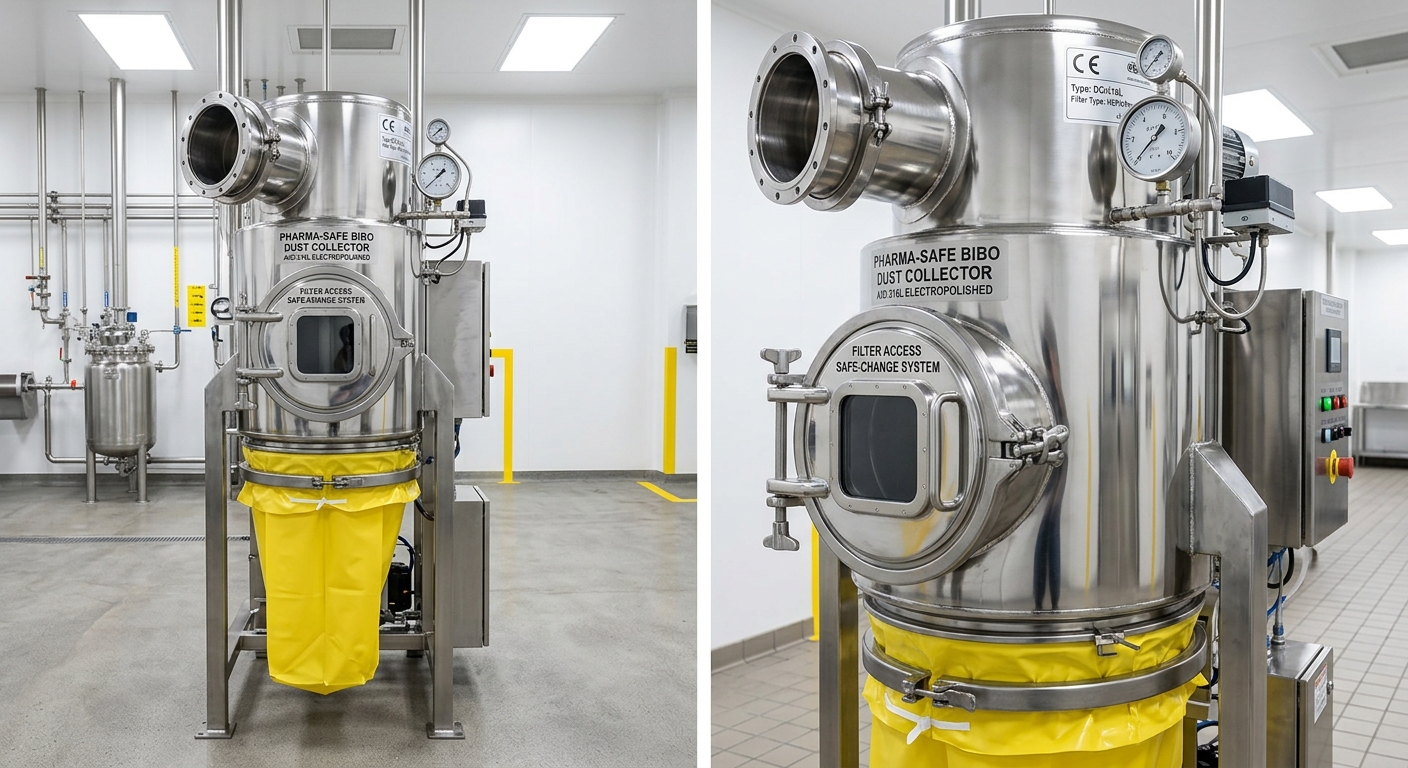
Bề mặt tiếp xúc với sản phẩm bằng thép không gỉ 316L, được đánh bóng bằng điện đến Ra ≤ 0,5 µm. Không có kẽ hở, không có ren bên trong, tất cả các mối hàn được mài phẳng và thụ động. Vòng đệm bằng silicon hoặc EPDM cấp FDA, có thể truy nguyên theo lô.
Hình học
Phễu nghiêng (tối thiểu 60°) để ngăn sản phẩm bị kẹt. Không có gờ ngang bên trong hội trường bẩn. Thiết kế có thể thoát nước - nếu bạn không thể làm sạch nó, bạn không thể xác nhận nó.
Truy cập bộ lọc
Vỏ bọc túi vào/túi ra (BIBO) có lớp lót PVC liên tục, hệ thống thanh đẩy-đẩy và quy trình thay đổi an toàn giúp người vận hành luôn ở bên ngoài vỏ bị nhiễm bẩn.
Tài liệu
Chứng chỉ vật liệu (3,1 chứng chỉ nhà máy cho mọi thành phần không gỉ), báo cáo độ nhám bề mặt, bản đồ mối hàn, giao thức FAT/SAT và gói chứng nhận IQ/OQ/PQ đầy đủ. Nếu nó không được ghi lại, kiểm toán viên sẽ cho rằng nó đã không xảy ra.
Danh mục sản phẩm của chúng tôi nêu chi tiết về cấu hình dòng GMP và các tài liệu chứng nhận đi kèm với từng đơn vị.
Kiểm soát lây nhiễm chéo: Phần khó khăn
Ngăn chặn giữ sản phẩm bên trong hệ thống. Kiểm soát lây nhiễm chéo giúp loại bỏ sản phẩm A khỏi sản phẩm B. Chúng nghe có vẻ giống nhau; họ không phải vậy.
Hệ thống chuyên dụng và chia sẻ
Câu trả lời rõ ràng nhất là một người thu thập cho mỗi sản phẩm, chấm hết. Câu trả lời kinh tế là người thu gom được chia sẻ việc dọn dẹp đã được xác thực giữa các chiến dịch. Hầu hết các nhà máy đều nằm ở khoảng giữa: các đơn vị chuyên dụng cho các hợp chất có hiệu lực cao hoặc nhạy cảm (penicillin, cephalosporin, chất gây độc tế bào - đây là những chất không thể thương lượng theo EU GMP Chương 3), các đơn vị dùng chung cho các sản phẩm OSD chung có tài liệu làm sạch.
Xác nhận làm sạch là nơi người thu gom không kiểm tra được
Bạn cần lau sạch khoang thông gió, phễu, van xả và mặt sạch của vỏ bộ lọc - sau đó chứng minh cặn dưới giới hạn Chuyển tiếp tối đa cho phép (MACO) đối với sản phẩm tiếp theo trong trường hợp xấu nhất. Bộ thu thập được thiết kế không có cổng mẫu hoặc có phễu mà bạn không thể tiếp cận được là một cơn ác mộng khi xác thực. Chỉ định quyền truy cập tăm bông từ ngày đầu tiên.
Ngăn chặn xả thải
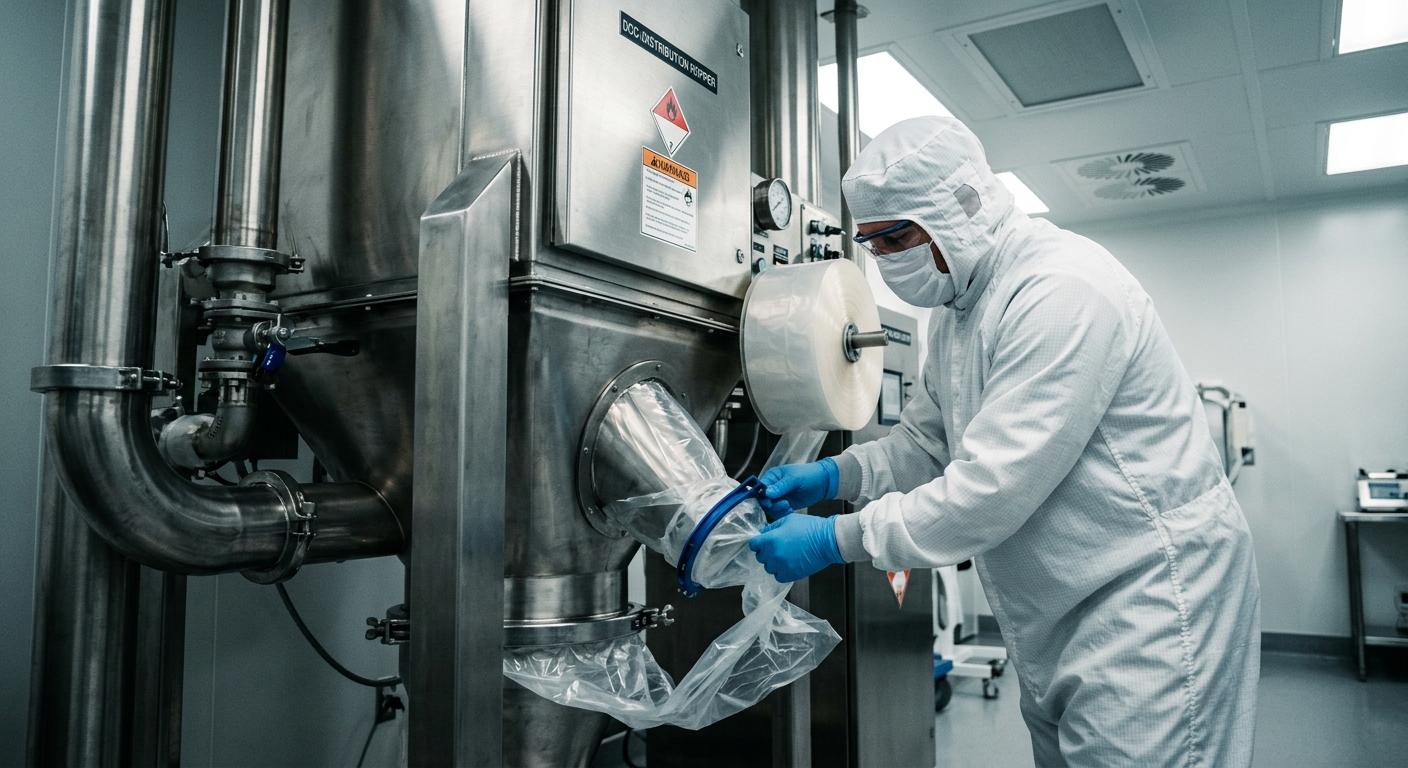
Đầu xả phễu của bộ thu bụi thường là liên kết yếu nhất. Tiêu chuẩn là hệ thống lót liên tục hoặc van bướm chia thành trống kín. Nếu bạn vẫn đang sử dụng cổng trượt thủ công và túi poly, bạn chỉ cần thay ca một lần là có thể xảy ra trường hợp lây nhiễm chéo.
Bụi dễ cháy: Rủi ro mà mọi người đều đánh giá thấp
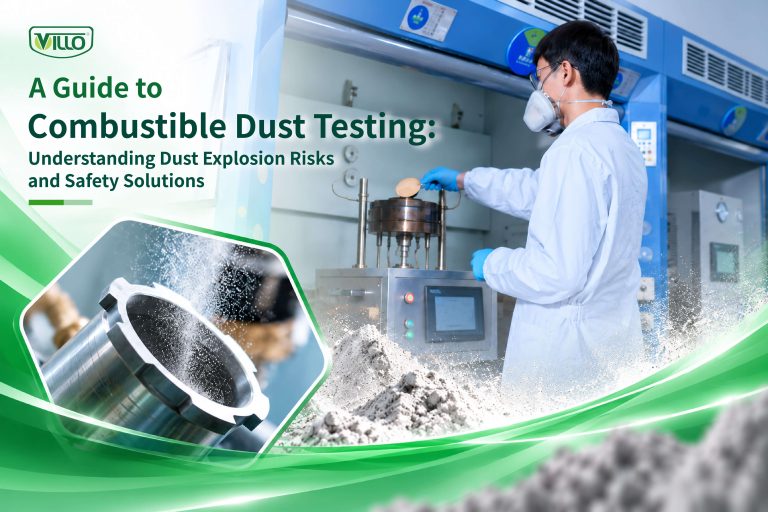
Đây là một sự thật khó chịu: hầu hết các loại bột dược phẩm đều dễ cháy. Lactose, MCC (cellulose vi tinh thể), tinh bột ngô, povidone và một danh sách dài các API đều có giá trị Kst đo được trong khoảng từ 100 đến 250 bar·m/s — hoàn toàn thuộc loại khả năng nổ St1 đến St2.
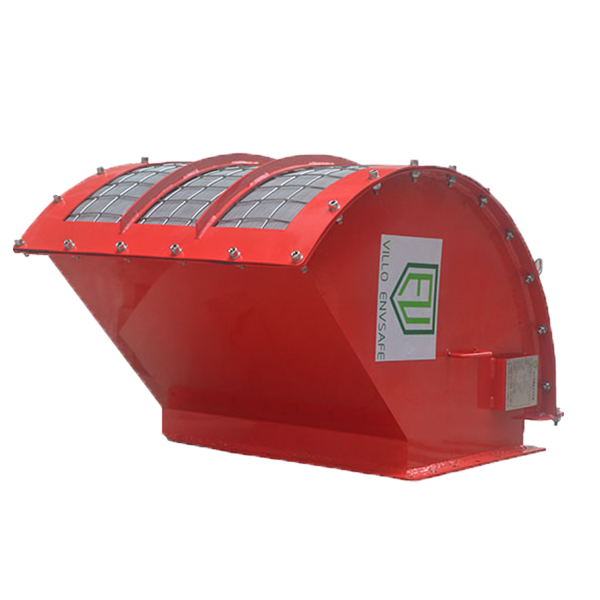
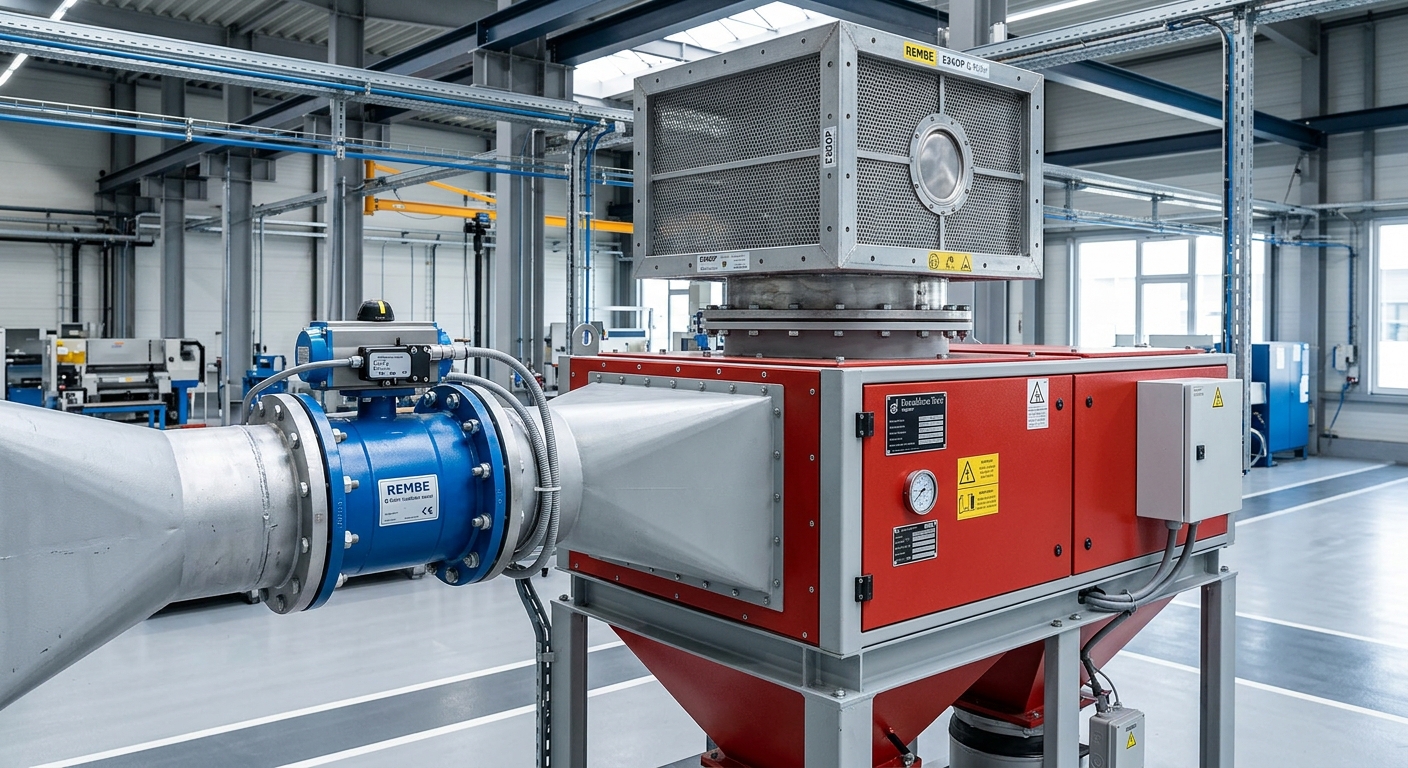
Điều đó có nghĩa là máy hút bụi dược phẩm xử lý các vật liệu này cần được bảo vệ chống cháy nổ theo NFPA 652/654 ở Hoa Kỳ hoặc EN 14491 ở Châu Âu. Vấn đề: các lỗ thông hơi nổ truyền thống thải vào khí quyển, điều này không thể chấp nhận được bên trong phòng sạch hoặc gần người vận hành. Vì vậy các nhà máy dược phẩm hầu như luôn kết hợp:
- Thông gió không ngọn lửa — contains the fireball and pressure wave inside the room.
- Van cách ly nổ — chemical or mechanical, on both inlet and outlet ducting, to stop flame propagation back to the process.
- Van khóa khí quay rated as isolation devices at the discharge.
Nếu bạn đang cân nhắc sự cân bằng giữa các yếu tố, hướng dẫn của chúng tôi về cách ly vụ nổ so với thông gió sẽ hướng dẫn chi tiết về logic quyết định và lựa chọn đĩa vỡ đề cập chi tiết về khía cạnh thông hơi.
Thay đổi bộ lọc mà không bị ô nhiễm: Quy trình BIBO
Thay đổi bộ lọc HEPA trong bộ thu gom dược phẩm là một quy trình được dàn dựng chứ không phải là nhiệm vụ bảo trì. Làm sai, nó sẽ làm lộ người vận hành và làm ô nhiễm khu vực xung quanh trong vài giây.
Trình tự vào/túi ra diễn ra gần như thế này:
- Kiểm tra tắt bộ lọc trước và giảm áp suất để xác nhận không có rò rỉ.
- Bộ lọc bị ô nhiễm được kéo vào một túi PVC đã được dán kín vào vòng đóng bao của vỏ.
- Túi được hàn nhiệt hai lần ở giữa, sau đó cắt giữa các vòng đệm - nửa bẩn sẽ được đốt, nửa sạch sẽ được gắn vào vỏ.
- Một bộ lọc mới được đẩy vào qua một túi mới và túi mới sẽ trở thành lớp lót cho lần thay tiếp theo.
Tay của người vận hành không bao giờ chạm vào bộ lọc và phong bì bị ô nhiễm không bao giờ được mở vào phòng. Chúng tôi đã đề cập đến các cơ chế thực tế trong hướng dẫn thay thế bộ lọc không bị nhiễm bẩn — bạn nên đọc trước khi thay bộ lọc tiếp theo.
Một ví dụ thực vật thực tế: Bộ API có hiệu lực cao
Hãy xem xét một nhà sản xuất theo hợp đồng vận hành bộ OEB 4 mới cho máy tính bảng điều trị ung thư, OEL 3 µg/m³. Hệ thống thu gom bụi quy định:
- Bộ thu gom chuyên dụng cho mỗi phòng xử lý (tạo hạt, trộn, nén, phủ) — không có đường ống chung.
- Cấu trúc được đánh bóng bằng điện 316L, Ra 0,4 µm, phễu có thể thoát nước hoàn toàn ở 70°.
- BIBO HEPA chính H14 (99,995% tại MPPS), tiếp theo là HEPA thứ cấp thay đổi an toàn trong ống xả.
- Xả lớp lót liên tục vào thùng phuy 25 L bên trong buồng xả dòng.
- Hệ thống thông gió không ngọn lửa cộng với cách ly hóa học trên ống dẫn vào (công thức dựa trên lactose, Kst đo ở tốc độ 180 bar·m/s).
- Chu trình WIP đầy đủ với giải pháp CIP đã được xác nhận, lấy mẫu gạc tại 14 vị trí được xác định.
Tổng chi phí lắp đặt: khoảng 4,5 × một bộ thu công nghiệp tiêu chuẩn có cùng luồng khí. Kết quả kiểm tra: không có quan sát nào về phạm vi thu gom bụi trong ba lần kiểm tra theo quy định trong hai năm đầu tiên. Đó là phép toán biện minh cho việc chi tiêu.
Định cỡ và tốc độ nắm bắt: Đừng tin vào số danh mục
CFM quy tắc ngón tay cái của nhà cung cấp được viết cho trường hợp dễ dàng nhất. Dược phẩm hiếm khi được. Một số kích thước thực tế cần đưa vào thông số kỹ thuật:
- Ghi lại vận tốc tại nguồn: 0.5–1.0 m/s for fine powders, up to 2.5 m/s for active dispensing of cohesive APIs.
- Tỷ lệ không khí trên vải: stay below 1.0 m/min (3.3 ft/min) for HEPA-protected pleated cartridges handling sticky pharma dust. Pushing higher accelerates blinding and shortens filter life from years to months.
- Vận tốc ống dẫn: 18–23 m/s to keep cohesive powders suspended without abrading the duct interior.
- Báo động giảm áp: two-stage — warning at 1.5 kPa above clean baseline, shutdown at 2.5 kPa.
Nếu nhà cung cấp báo giá một đơn vị nhỏ hơn, rẻ hơn bằng cách tăng tỷ lệ không khí trên vải, hãy bỏ đi. Bạn sẽ phải trả tiền cho quyết định đó hàng quý bằng việc thay thế bộ lọc. Tổng quan của chúng tôi về cách chọn máy hút bụi công nghiệp bao gồm khuôn khổ kích thước rộng hơn.
Mang nó lại với nhau
Việc thu gom bụi dược phẩm nằm ở điểm giao giữa sự an toàn của người vận hành, chất lượng sản phẩm và sự tồn tại theo quy định. Xác định đúng mức độ ngăn chặn, thiết kế để làm sạch và xác nhận ngay từ ngày đầu tiên, xử lý mọi tá dược thông thường như chất dễ cháy và ghi lại mọi thứ. Máy thu gom vượt qua cuộc kiểm tra không nhất thiết phải là máy đắt nhất — họ là những máy mà các nhà thiết kế hiểu rằng trong dược phẩm, máy hút bụi là thiết bị xử lý, không phải thiết bị tiện ích.
Nếu bạn đang tìm kiếm một dòng OSD mới, một bộ HPAPI hoặc trang bị thêm hệ thống ngăn chặn cho một cơ sở hiện có, nhóm kỹ thuật villotech sẽ xây dựng các bộ thu gom cấp GMP dựa trên các mục tiêu OEB cụ thể và các yêu cầu chống cháy nổ của bạn. Hãy liên hệ để biết thông số vận hành của sản phẩm trong trường hợp xấu nhất của bạn và chúng tôi sẽ giải quyết lại từ đó.